Archaeological flotation is a technique used to recover tiny artefacts and plant remains from soil samples. This season we finally decided it was about time to collect the soil samples and float them. It was the first time for Safra team members to experience the fun of collecting heaps of fine soil (5 litres) in a double plastic bag, labelling it (twice), taking a photo of the place in the field from where the sample was taken, carefully transporting it back home to the shed and then washing it (step 1).
This technique is quite useful to retrieve carbonized plant remains from archaeological context. Our houses have been almost dug out and we have found several floor levels as well as many mortars and ovens. It is quite easy to interpret the context as “people were living in these houses and cooking” but only by analysing the ash remains we can provide further evidence and a much clearer context.

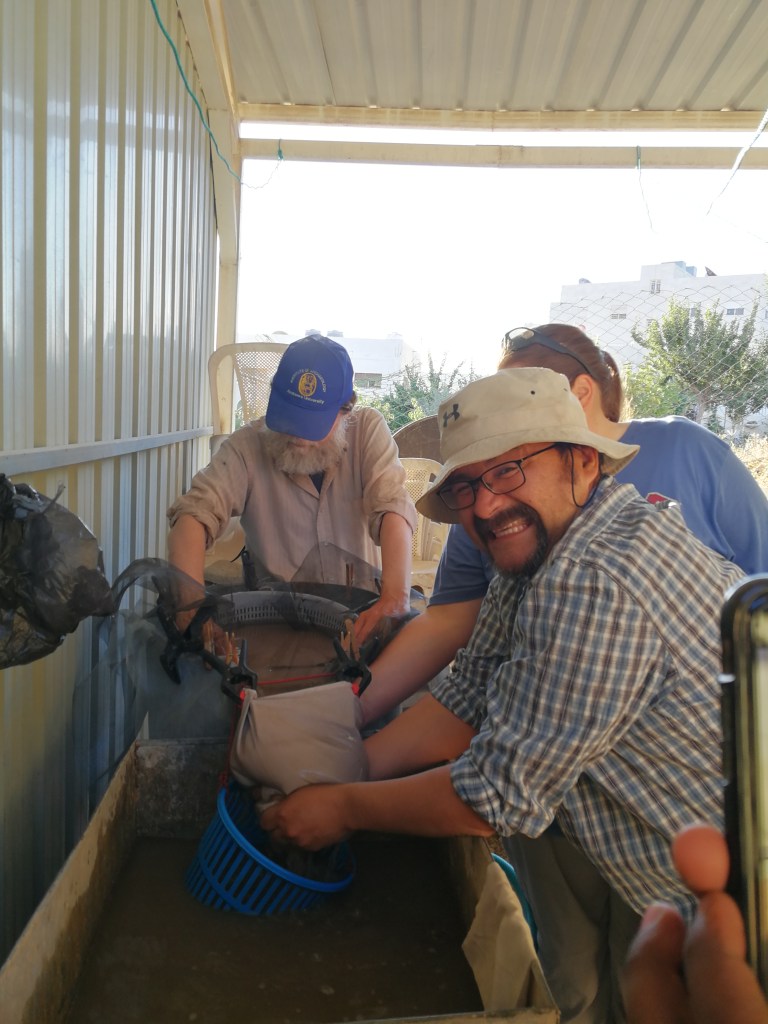
The collected soil sample is carefully placed on a screen of mesh wire cloth and water is gently bubbled up through the soil (step 2).
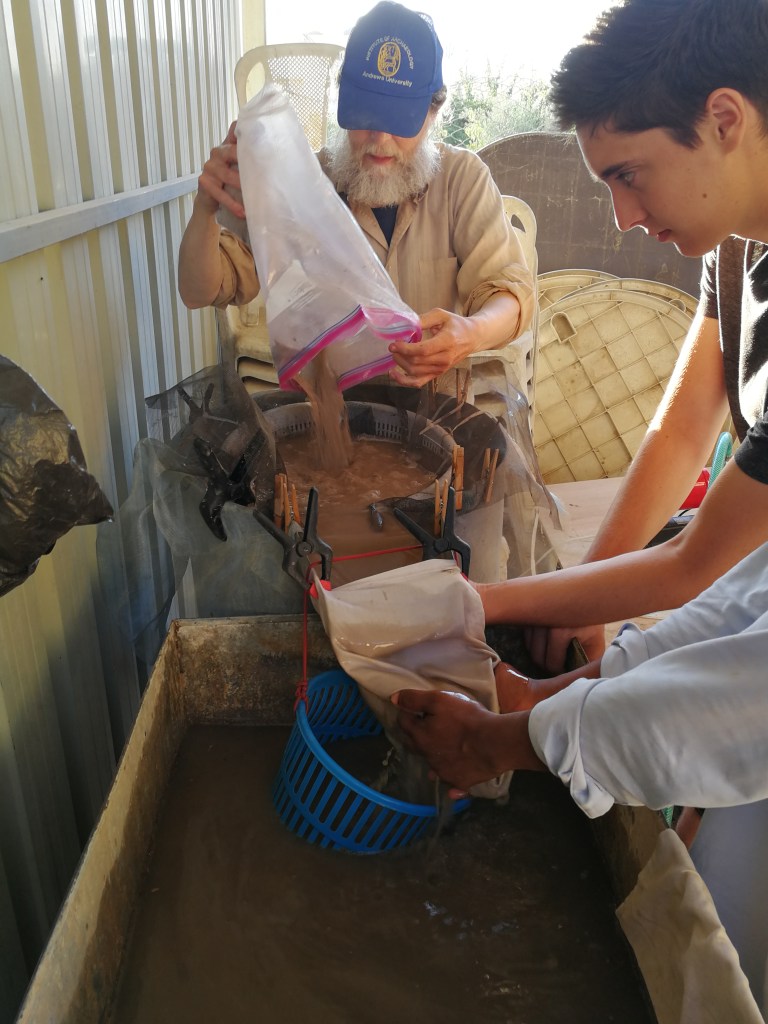
Less dense materials such as seeds, charcoal, and other light material float up and tiny pieces of stone, bone fragments, and other relatively heavy materials are left behind on the mesh.
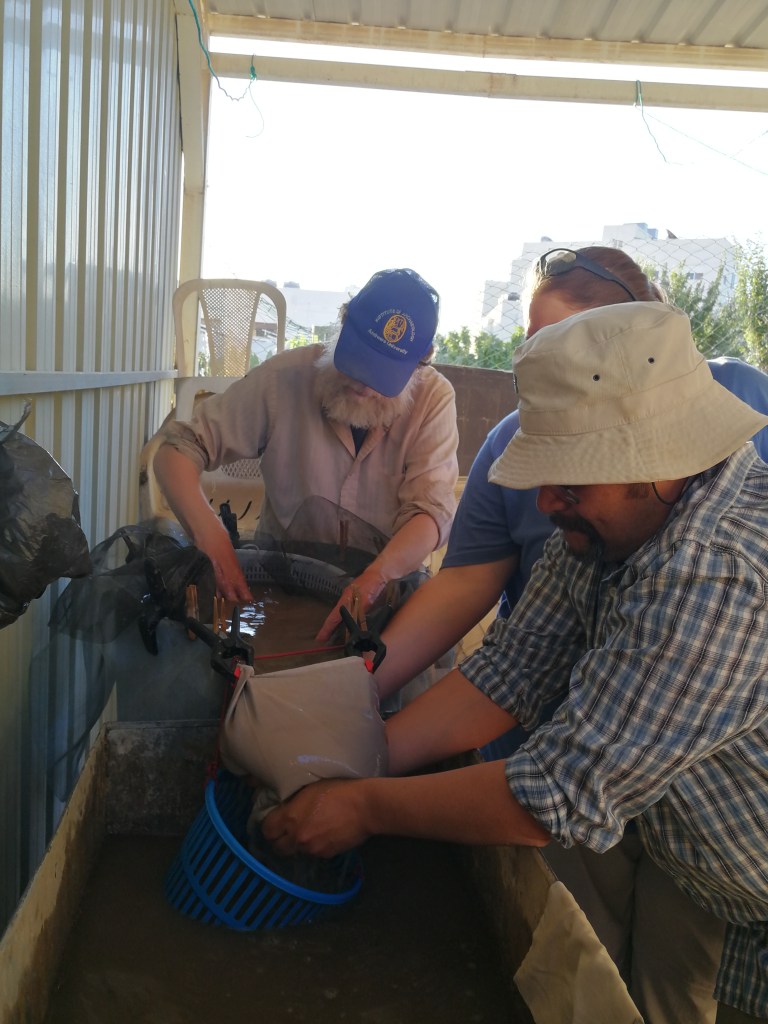
The bag is then left to dry (step 3) as well as the mesh (step 4), hence the two labels when taking a sample from the field.
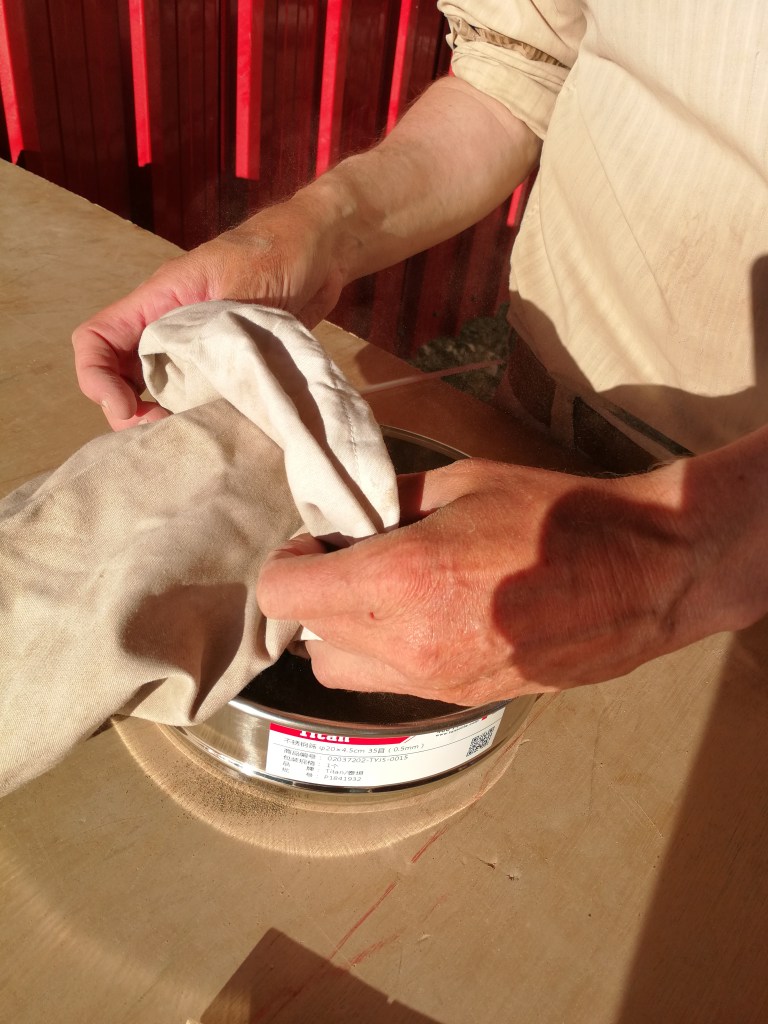
The next day the bags are emptied into a fine sift and the so called light fraction is collected (step 5).

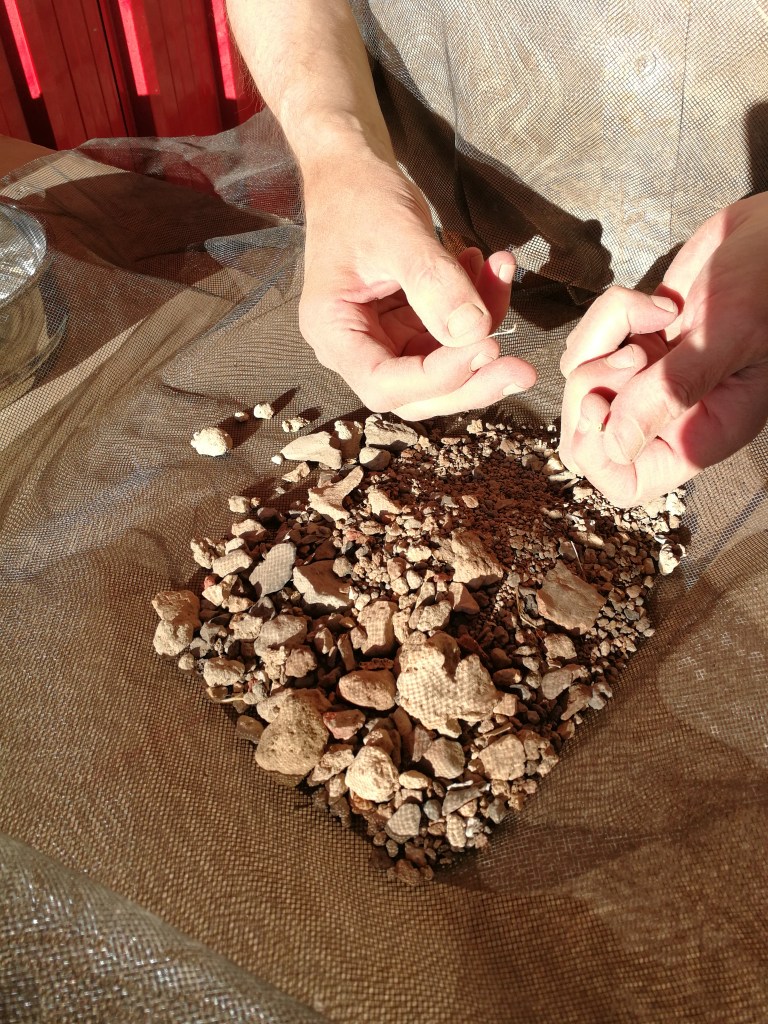
Really small objects like pendants or beads are rarely found, but sometimes the heavy materials may contain a surprise.
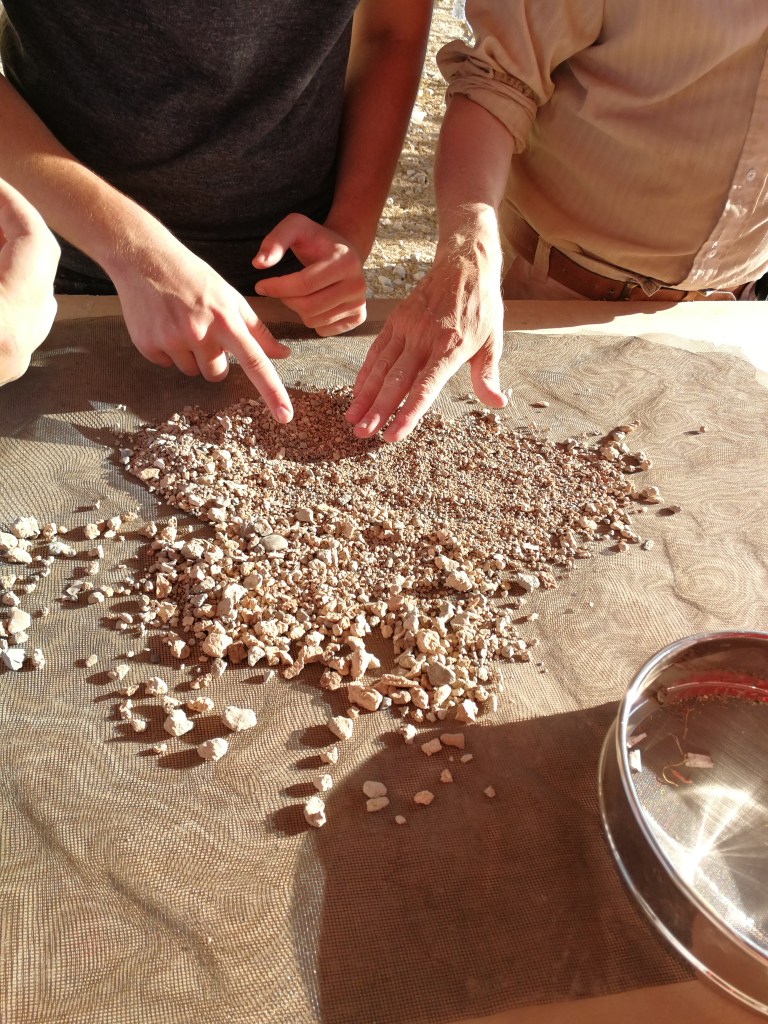
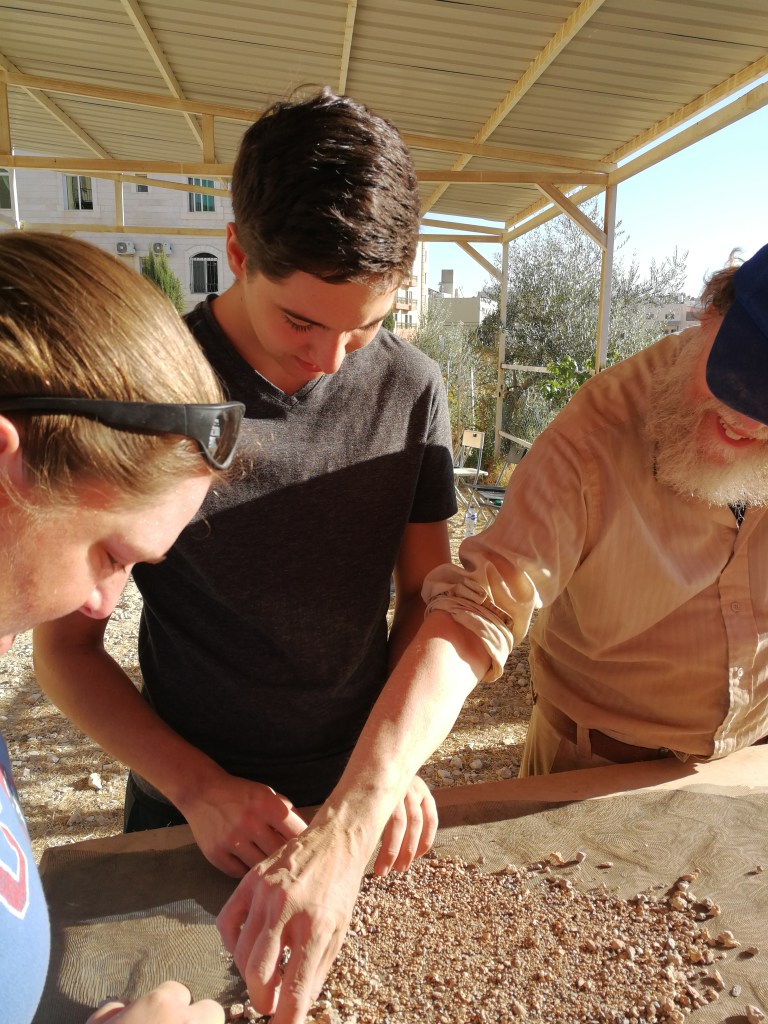
The flotation was very efficient. The method allowed us to process many soil samples. With a couple of containers, lots of meshes and water it was an interesting experience and a great way to recover the material.

